Drywall Crack Repair
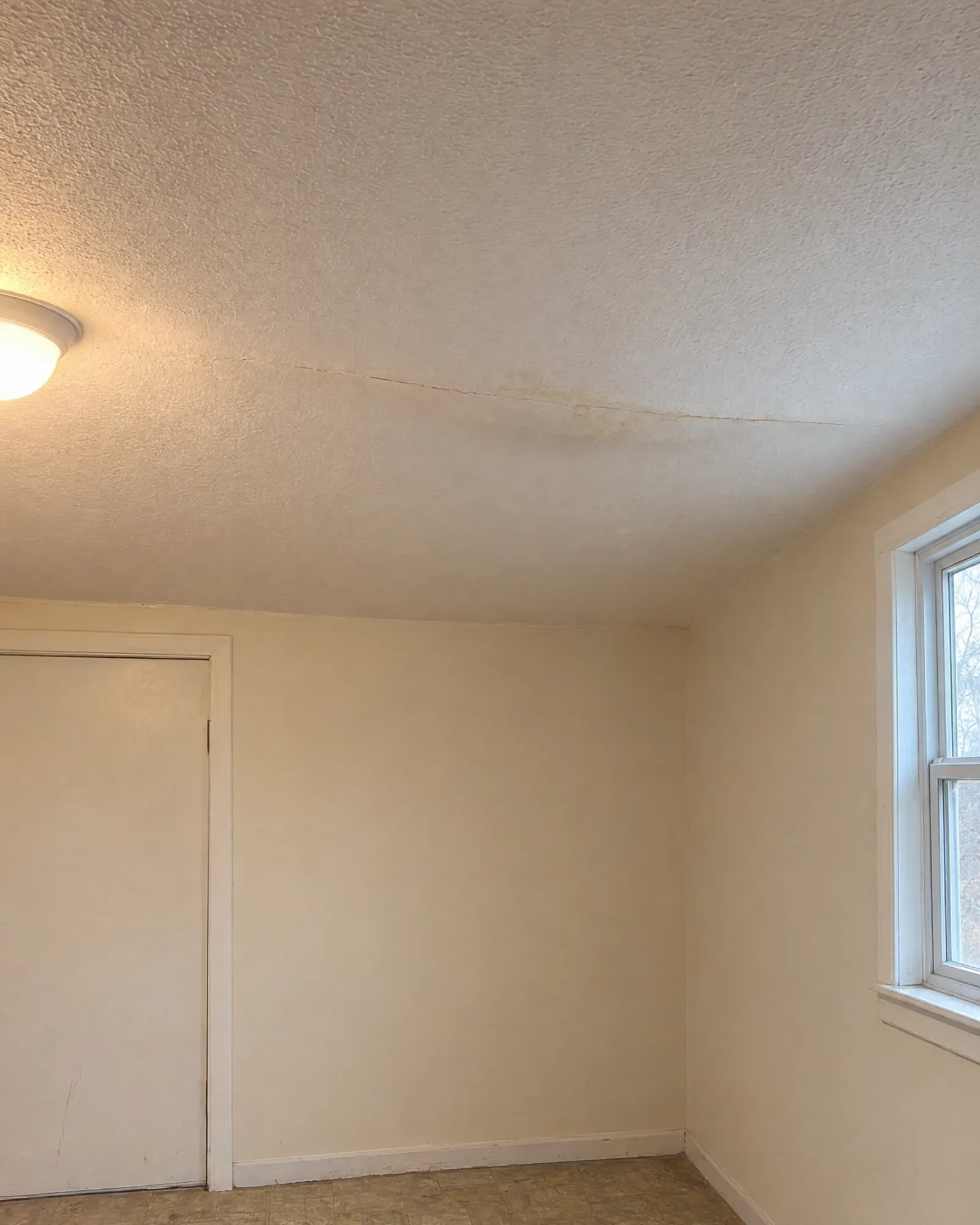
Diagonal cracks off door and window corners, split tape seams and cracks that return after a quick fix.
Why settling cracks form and how they get closedSettling cracks over doors, brown rings from a dripping AC line, sagging ceiling panels and punched-through walls, repaired and blended into the texture you already have so the spot disappears under paint.
Your call goes to a nearby repair pro, who can talk the damage through and book a time to price it.
Call 7 days, 7am–9pm
Size decides most of the job. It sets how many coats of compound go on, how long each one has to dry, and whether the work fits into one visit or needs two. Here is how it usually breaks down, so you can picture your own wall.
Nail pops, screw and anchor holes, and hairline cracks a few inches long.
A hard-setting fill, a thin second coat, a light sanding and a touch of texture. Many of these are finished and ready for primer in one trip.
Doorknob holes, a seam that has split for a few feet, or a crushed outside corner.
A backer or new gypsum gets fastened in, taped and built out over two or three coats. Waiting on coats to dry is what most often turns a job this size into two visits.
A ceiling panel that dropped after a leak, a wall opened for plumbing, or cracks across a whole room.
Bad gypsum gets removed back to the framing and replaced, then taped, coated and retextured well past the edges so the new section blends in. Plan on two or three visits, plus time for your paint.
What does that mean for the bill? Fixr's national drywall cost guide, updated January 2025, puts most repair jobs at roughly $200 to $550, hole repairs at about $60 to $200 and crack repairs at about $60 to $330. Those numbers describe the country as a whole rather than Eagle Pass. Your own number comes from the pro once the wall has been seen, and what pushes it up or down the most is size, ceiling height, texture and how many spots get grouped into one trip.
A good first step: walk the house and count every crack and hole, then mention them all on one call.
Four kinds of jobs make up most drywall calls in Eagle Pass. Choose whichever sounds like your wall and start there. Every card opens a page with causes, the repair steps and typical costs.
Diagonal cracks off door and window corners, split tape seams and cracks that return after a quick fix.
Why settling cracks form and how they get closedBrown rings from AC drain lines and roof leaks, soft spots and sagging panels.
Fixing stained and sagging ceilingsOrange peel, knockdown and popcorn blended over patches so the repair stops showing.
Blending texture so patches vanishDoorknob holes, anchor holes, punched walls and outside corners that got knocked in or split.
Patching holes and rebuilding cornersRentals are a big share of local housing. Census estimates count about 3,600 of the city's roughly 9,100 occupied homes as renter-occupied, so plenty of drywall work happens right after a move-out.
Walk the unit the day the keys come back and photograph every hole, scuff and crack. Send the pictures together and the whole unit can be priced at once.
You can leave a lockbox code or meet at the door. Say which you prefer when you call, and the visit is planned around it.
If someone is still living there, the work can follow their schedule. Doing one room at a time keeps the rest of the house usable.
Grouping rooms, or several units, into one trip usually costs less per spot than separate calls, because setup, drying time and texture mixing are shared.
Next, tell us the date the new tenant moves in. The coats can then be planned so the paint has time to cure before move-in day.
| What matters | Patch the spot | Replace a section | Skim the full wall |
|---|---|---|---|
| Best for | Holes up to a hand's width, short cracks, nail pops | Water-softened board, big impact holes, a sagging ceiling panel | Walls covered in old patches, torn face paper or uneven texture |
| Coats and drying | Two or three thin coats; a setting fill hardens in hours | Tape plus about three coats over the new seams | One or two coats across the whole surface |
| Visits | Often one | Usually two | Two or more |
| Texture work | A small blend around the patch | A wider blend so the new board disappears | The full wall is retextured or left smooth |
| Dust | Light, one small sanding area | Moderate, cutting plus sanding in one zone | The most, since the full wall gets sanded |
Can't decide between them? Send a photo. From a clear picture the pro can usually tell which route makes sense, and you decide from there.
A few lines and your town are enough to begin. Here is what follows.
Pressing send okays a call or text to your phone from a nearby drywall pro about this repair. What happens to your info.
Next, a drywall pro from around town gets in touch to hear about the damage and set up a price.
August highs in Eagle Pass average close to 99 degrees, and most of the annual rain falls between spring and fall. Long heat, sudden storms and the swing between wet and dry months each leave their own marks indoors. The seasonal guide walks through what each season tends to do, and what to check first.
Most interior walls use gypsum panels a half inch thick. Ceilings sometimes use a sag-resistant half-inch panel or heavier five-eighths board, and the wall between a garage and the house is often five-eighths fire-resistant board. A repair uses the same thickness so the patch sits flush.
Setting compound comes as a powder and hardens by chemical reaction, which makes it the right base for deep fills and cracks that need strength. Premixed all-purpose or lightweight mud goes over it for smooth finish coats. Using both keeps a repair strong and easy to sand.
Orange peel, knockdown, sand finish and popcorn are the patterns you will run into most. Matching one means adjusting the mix, the spray pressure and the timing of the knockdown until a test area blends with the surface beside it. If your walls carry a sprayed texture, a small sample beside the patch is the easy way to confirm the match before the whole spot is done.
Not sure what your texture is called? Aim a flashlight so its beam skims along the wall, then snap a close photo. Light from the side makes the pattern stand out. There is more detail on how a texture match is built up.
Yes. Eagle Pass is the county seat of Maverick County, and the repairs reach out into the communities around it and a couple of towns farther afield.
Positions from each town's published coordinates; rings show straight-line distance from Eagle Pass.
Ceilings take more water damage than walls, because water runs downhill and pools on the board. In most houses here the source is either the air conditioning or the roof.
A blocked AC drain line or a rusted pan above the ceiling can drip unseen for a long stretch. Systems run hard through a South Texas summer, and a slow drip leaves a brown ring right under the air handler.
Storm rain finds gaps around vents and flashing. The mark on the ceiling can land a few feet away from the real leak, because water travels along the framing first.
Board that soaks up water softens and drops between the joists. A seam can also split in a straight line where two panels meet.
Patching popcorn means matching a coarse, uneven texture. In older houses that texture may contain asbestos, so testing a sample before anyone scrapes is the safe first move.
Your next step is to stop the water. Have the AC drain or the roof looked at, give the wet area time to dry, then call. Patching over a live leak only means doing the job twice. Here is what a water-stained ceiling repair involves.
Eagle Pass has a long building history. It was the first American settlement on the Rio Grande, and the townsite was laid out in the 1840s. Census estimates count 570 homes in the city that date to 1939 or before, and about 1,500 more from the 1940s through the 1960s. Most of the housing is newer, though: the median home here was built around 1990.
Housing units by decade built. Figures from the Census Bureau's 2020–2024 American Community Survey estimates, table B25034, for Eagle Pass city.
Some older houses have plaster over wood lath instead of drywall. Plaster cracks in its own way, and a proper repair uses a bonding agent and a patch built up in layers. Drywall can fill a large opening, but its edges have to be brought level with the thicker plaster around it.
Board from the middle of the last century was often thinner and finished with different compounds. Seams may show ridges, and a skim coat across the wall evens them out.
Older paint can contain lead. Ask for dust-controlled or wet sanding, and keep kids and pets out of the room until cleanup is finished.
If your house is older, mention its rough age when you call. That helps the pro bring the right materials the first time.
Drywall work makes dust, but it is very manageable. This is how a room is usually set up.
Next: move what you can away from the damaged wall, and the setup goes smoothly.
Call, fill in the form, or send a picture from your phone. Any one of those is enough to get a local pro looking at your wall.
Call 7 days, 7am–9pm
Once you reach out, a local pro sizes up the job and gives you a number before anything gets cut or sanded.